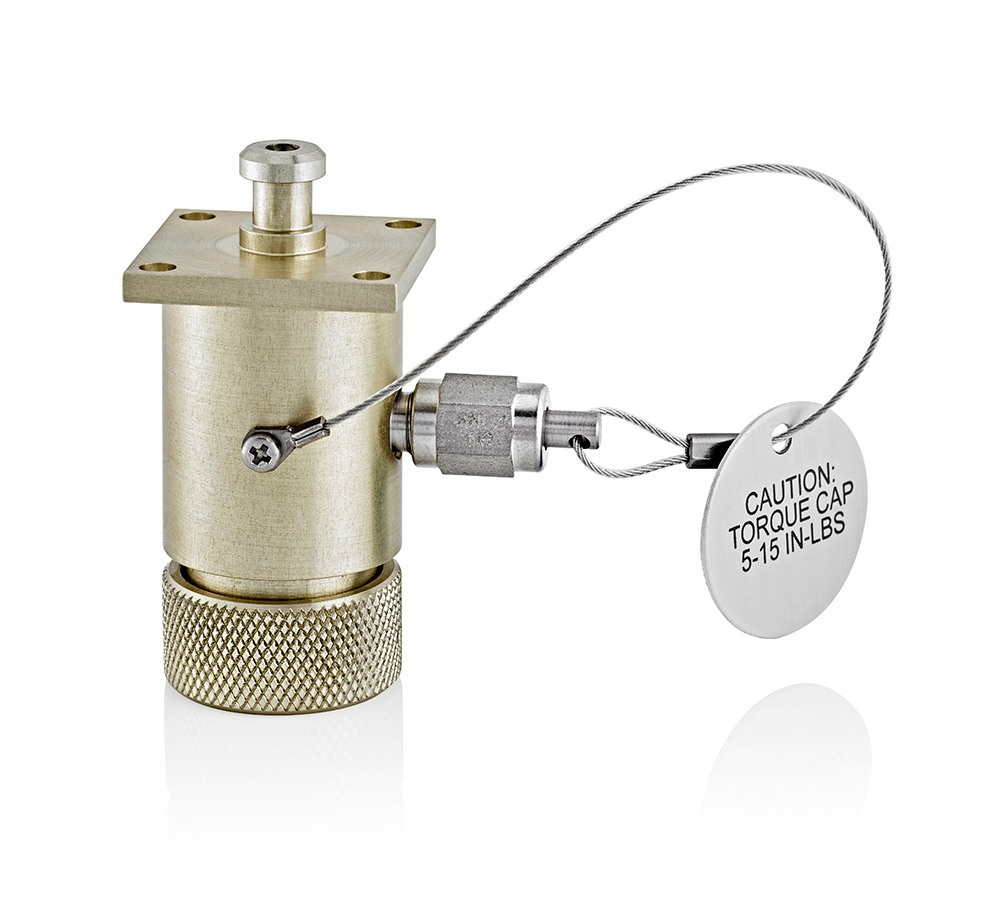
Insert

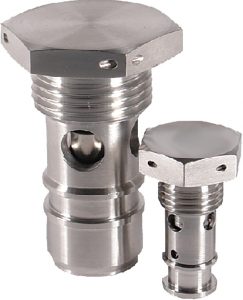
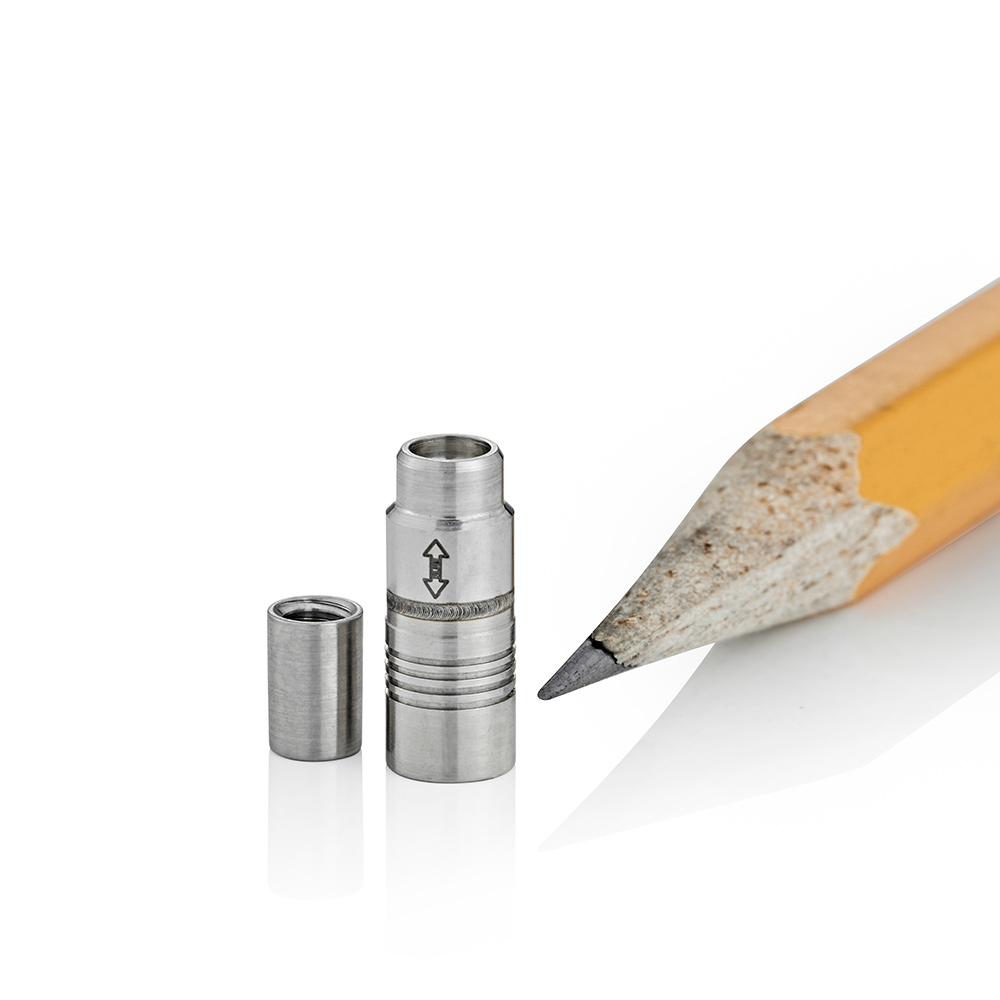
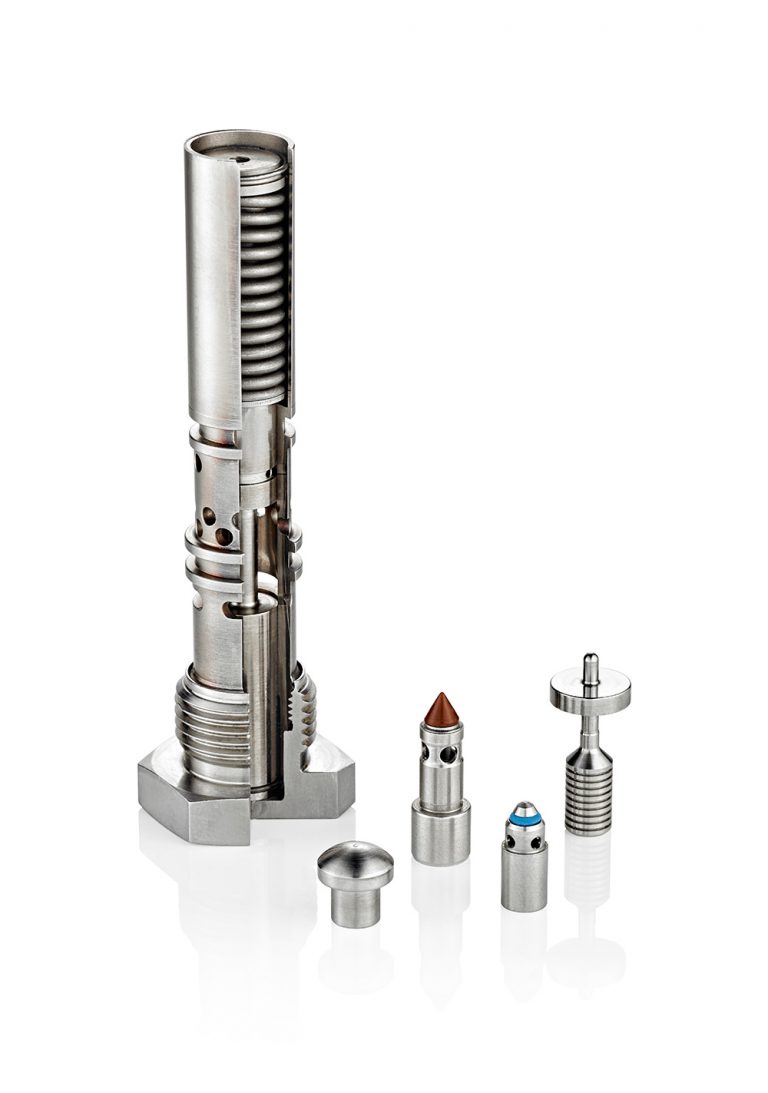
Insert type valves are self-retained valves that are pressed into a manifold cavity. Retaining grooves are found on the valve body and are used to lock the valve in place with the help of a locking pin.

Ring Lock

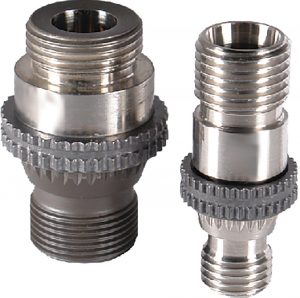
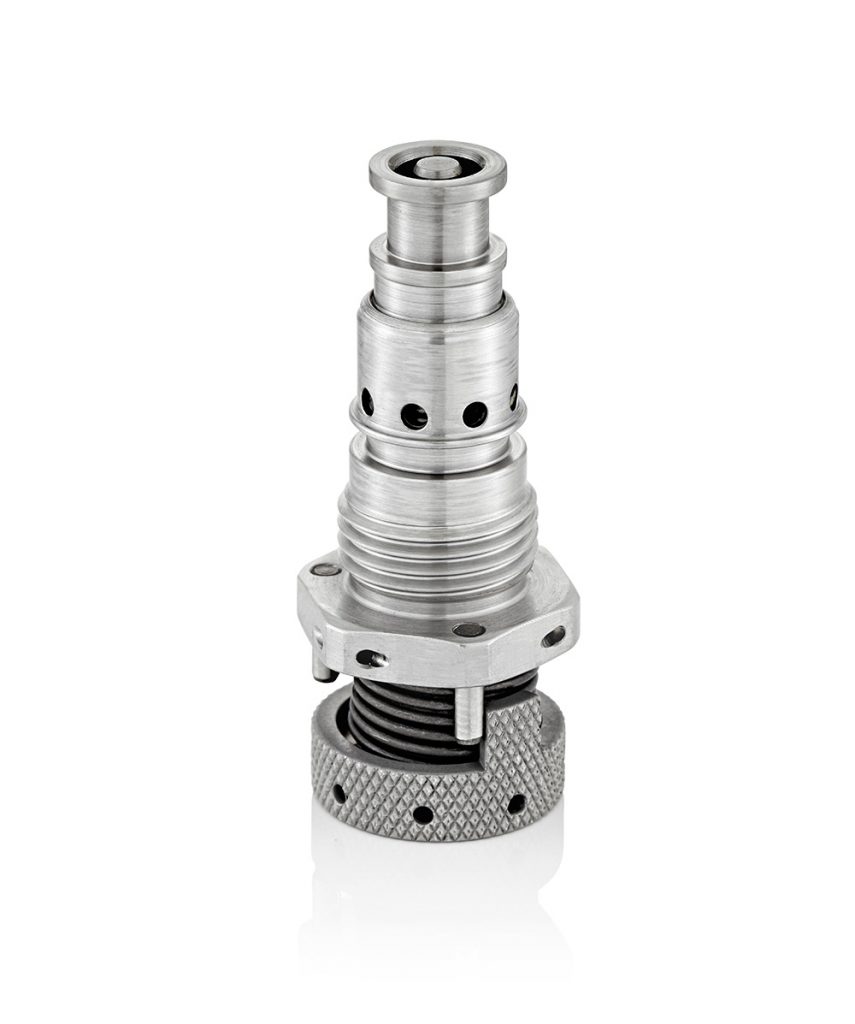
Ring Lock Valves are valves that contain a locking ring that is used to prevent external rotation of the valve when installed in the respected manifold.

Cartridge

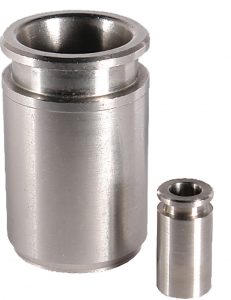
Cartridge type valves are valves that are pressed into a Manifold and are held in place by system flow and pressure with the use of O-rings.

Line Mount (M/M, M/F, F/M, F/F)

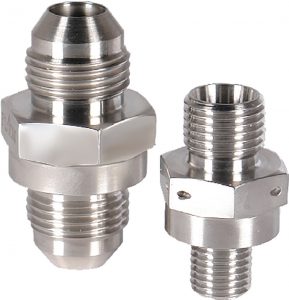
Line mount valves are valves that contain either Military or Aerospace style fitting ends, represented by the respected “dash” numbers.

Manifold LRU

This describes a valve mounted onto a manifold where the flow is through the valve and into the manifold. It is used to describe Ring-Lock or Insert valves.

Line-Type or Cartridge can be mounted in either direction

Size

Ausco valves come in multiple sizes ranging from -2 to -24: Typically “-2” size fitting ends correlate to an  external thread size of .3125-24 UNJF-3A per AS8879  Typically “-24” size fitting ends correlate to an  external thread size of 1.8750-12 UNJ-3A per AS8879.

Fluid Type

Red Oil (MIL-H-5606, MIL-H-6083, MIL-H-83282, 57097, etc)  Red Oil is the generic term used for petroleum-based hydraulic fluid used in  military applications. It is dyed red to differentiate it from commercial fluids and from other fluids used on military applications, such as lube oil.

Skydrol (LD-4, LD-5, BMS 3-11, etc)  Skydrol is a water based fluid with phosphate esters that is fire resistant. It is heavier so you get less work capability per gallon of fluid.

Lube Oil (MIL-L-7808, MIL-L-23699, etc.)  Lube oil is primarily used in engine lubrication systems.

Coolant (PAO, EGW, PGW)  These fluids have better heat handling and thermal properties than water. They are often denser than water and require special seals to handle the fluids.

Coolant (Methanol, Ethanol)  Methanol and Ethanol are used in open loop cooling systems. The Methanol or ethanol are boiled off. They may be collected later and recompressed into a liquid or boiled off into the atmosphere. They are very efficient at heat transfer.

Fuel (Jet A, JP-4, JP-5, JP-8, JP-10, Diesel)  Jet Fuels are Kerosene-based fluids with various chemicals to create the desired properties. They are simulated in lab environments by Stoddard Solvent IAW MIL-PRF-7024.  Sometimes heavy fuels such as diesel are used in UAV applications.

PotableWater  Potable water is used on commercial aircraft in galleys and lavatories. Valves used in these systems are subject to calcification or worse, as local water all over the globe is used as potable water.Gases  Nitrogen, Air
Flow Direction


Into Manifold

This describes a valve mounted onto a manifold where the flow is through the valve and into the manifold. It is used to describe Ring-Lock or Insert valves.  Line-Type or Cartridge can be mounted in either direction

Out of Manifold

This describes a valve mounted onto a manifold where the flow is out of the manifold and then through the valve. It is used to describe Ring-Lock or Insert valves.  Line-Type or Cartridge can be mounted in either direction

Bi-Directional

Restrictors are typically bi-directional valves, where the flow is the same in either direction.  Relief valves can be designed back to back to relieve pressure in either direction.

Manifold Mount – Axial Inlet

For valves mounted in a manifold, the flow is into the valve at the valve and exits through a port drilled radially into the manifold. This is the most common way to install a relief valve and pressure compensating flow control valve.

Manifold Mount – Radial Inlet

For valves mounted in a manifold, the flow enters the valve at the valve through a port drilled radially into the manifold and exits through either another radial port or axially through the bottom of the installation hole. This is the most common way to install a pressure regulating.

Screen

Screened

Screens are generally used to protect an internal orifice or the downstream system from Foreign Object Debris (FOD). A screen is used in a valve typically when the valve flow orifice diameter is less than .060 IN.

Unscreened

A valve does not require a screen when the valve flow orifice diameter is greater than .060 IN.

Flow Type

Standard

Typically the standard internal leakage for insert type valves is expressed as 1 drop per minute at 5 psid.

High Flow

Need Description Copy 

Leakage

Standard Leakage

Typically the standard internal leakage for insert type valves is expressed as 20 drops per minute at the Shutoff or Reseat Pressure.

Reduced Leakage

Typically the standard internal leakage for insert type valves is expressed as 1 drop per minute at 5 psid.

Zero Leak

Zero drops per minute is typically measured across a range from 5 psi to the Operating Pressure, which is generally 3,000 psi.

Restrictor

Standard Leakage

Typically the standard internal leakage for insert type valves is expressed as 20 drops per minute at the Shutoff or Reseat Pressure.

Reduced Leakage

Typically the standard internal leakage for insert type valves is expressed as 1 drop per minute at 5 psid.

Zero Leak

Zero drops per minute is typically measured across a range from 5 psi to the Operating Pressure, which is generally 3,000 psi.